CRAWL Technology
Tech that proactively reduces risk, injury and loss of life.
The system comprises patented Bi-directional CRAWL Saddle and CRAWL Variable Message Sign (VMS) Technology placed along the central reserve and the verge at frequent intervals, typically a Saddle and VMS are placed at 500m centres with Saddles placed at 100m centres between the Saddle and VMS in the central reserve.
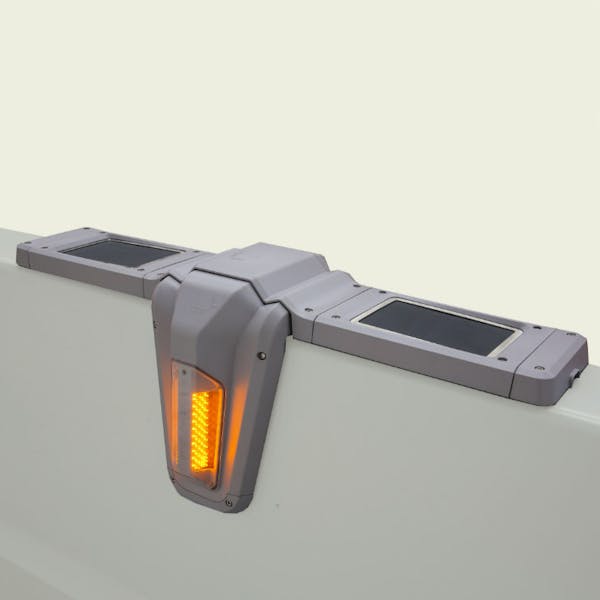
Saddle unit on central reserve concrete barrier
01
Solar Panel
02
Battery Storage Area
03
Light Bar displays Amber, Red or Blue
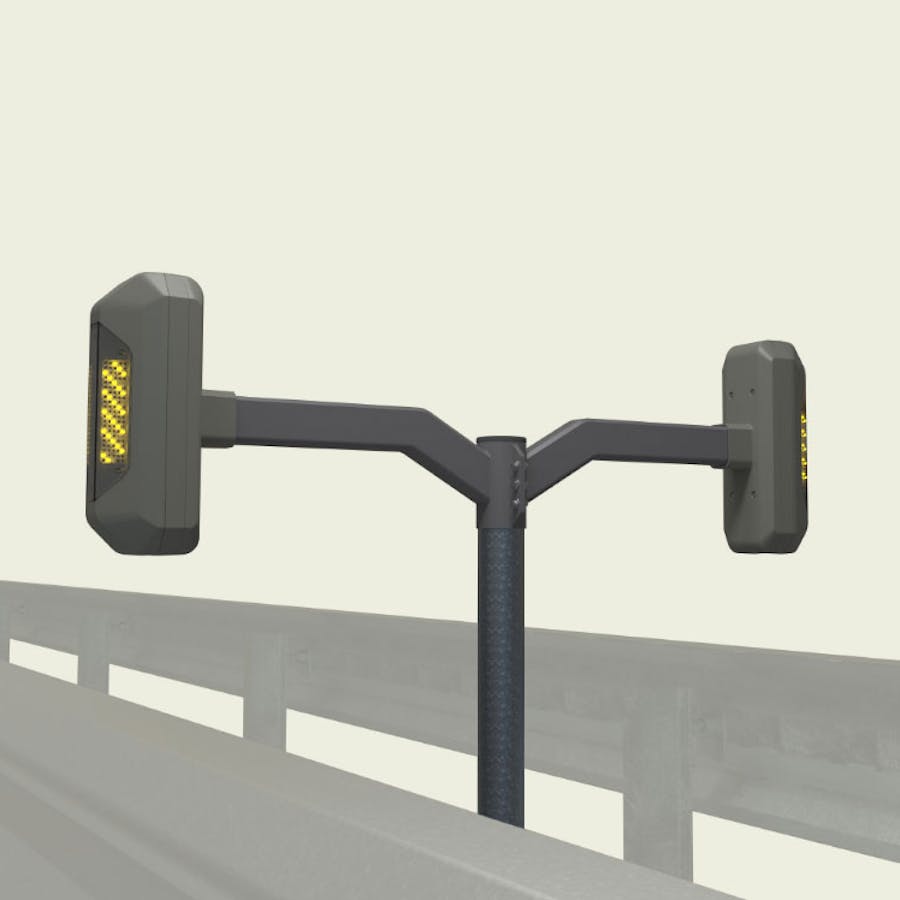
Central unit to reserve with steel or wire rope barrier
The LEDs can flash as Amber, Red or Blue to serve as an indication to drivers of a problem ahead, the CRAWL Variable Message Signs (VMS) mounted on the central reserve concrete barrier will automatically turn to face oncoming vehicles and display a warning symbol/pictogram, the combination of flashing LED’s and the activated VMS focuses driver attention as to a problem ahead providing them with time and distance to adjust their approach in order to avoid incidents.
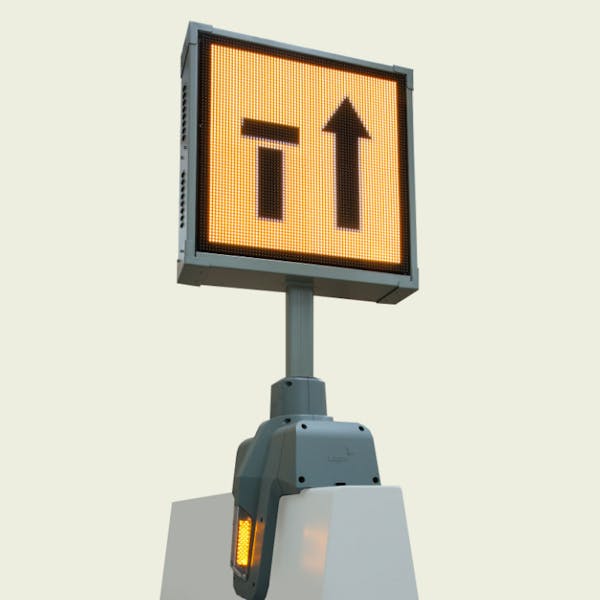
VMS unit in the Live Position
01
High-Definition VMS
02
VMS unit rotates by 90 degrees when idle
03
Motor housed within the saddle unit
Master Control Units
A verge side Master Control Unit (MCU) larger VMS are also placed in the verge at 1km centres.
The Saddles and VMS are controlled by the MCU’s which are also connected together to form a communications network, this communications network is then ultimately connected to a regional or national control room. The CRAWL system is capable of taking inputs from many different types of input devices such as Radar Sensors which are connected to the MCU’s, PTZ CCTV cameras are also connected to the MCU’s enabling operators to view the highways and automatically be presented with a view of an incident upon detection by an input device.
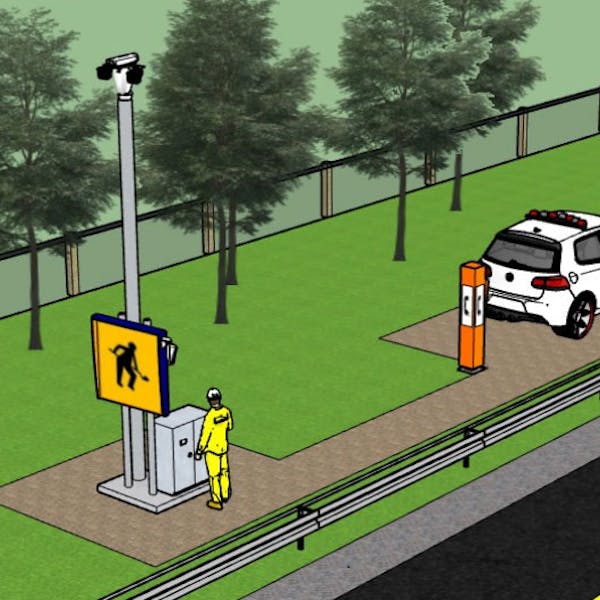
01
Radar, PTZ CCTV
02
High-Definition Large VMS
03
MCU
Precise communication & incident detection
The system provides an extremely effective way of providing timely and precise communication with Road Users, the Road Authority, the Emergency Services and Road Operators enabling real time messaging and information flow and an ability for the Road Authority to actively manage the network and incidents at a local, regional and national level. The system provides an ability to detect and therefore manage numerous incidents at different locations, in both directions, along the network simultaneously.